A concrete driveway or patio looks like a finished product the day it's poured. What you're actually paying for happened before that, in the dirt underneath and in the mix truck that showed up. Most of the problems homeowners around College Park call about later, the heaving slab, the crack that opened up in the second winter, the patio that ponds water after every storm, trace back to a decision made before the first wheelbarrow of concrete hit the ground. Here's what separates a contractor who gets that from one who's just pouring and leaving.
Ask what's going under the concrete, not just what's in it
Soil around here is a mix of clay and loam, and a lot of lots in College Park and the older parts of Prince George's County sit on clay that holds water and swells when it's wet, then shrinks and cracks when it dries out in August. Concrete poured straight onto that native clay without a proper base will move with it. A contractor who knows the ground should be excavating down and laying 4 to 6 inches of compacted crushed stone, not just scraping the topsoil and pouring. Ask how they compact it. A plate compactor run over loose gravel for show isn't the same as proper lift compaction.
Ask about the mix too. A patio and a driveway shouldn't use the same psi concrete. For a driveway in this climate, where we get real freeze-thaw cycles from December through February, 4000 psi air-entrained concrete is the right call, not the 3000 psi mix that's fine under a shed. Ask whether they're using rebar or wire mesh. Mesh has its place on a thin walkway slab, but for a driveway that's carrying a car, rebar tied on chairs so it sits in the middle of the slab, not resting on the gravel, holds up better over time.
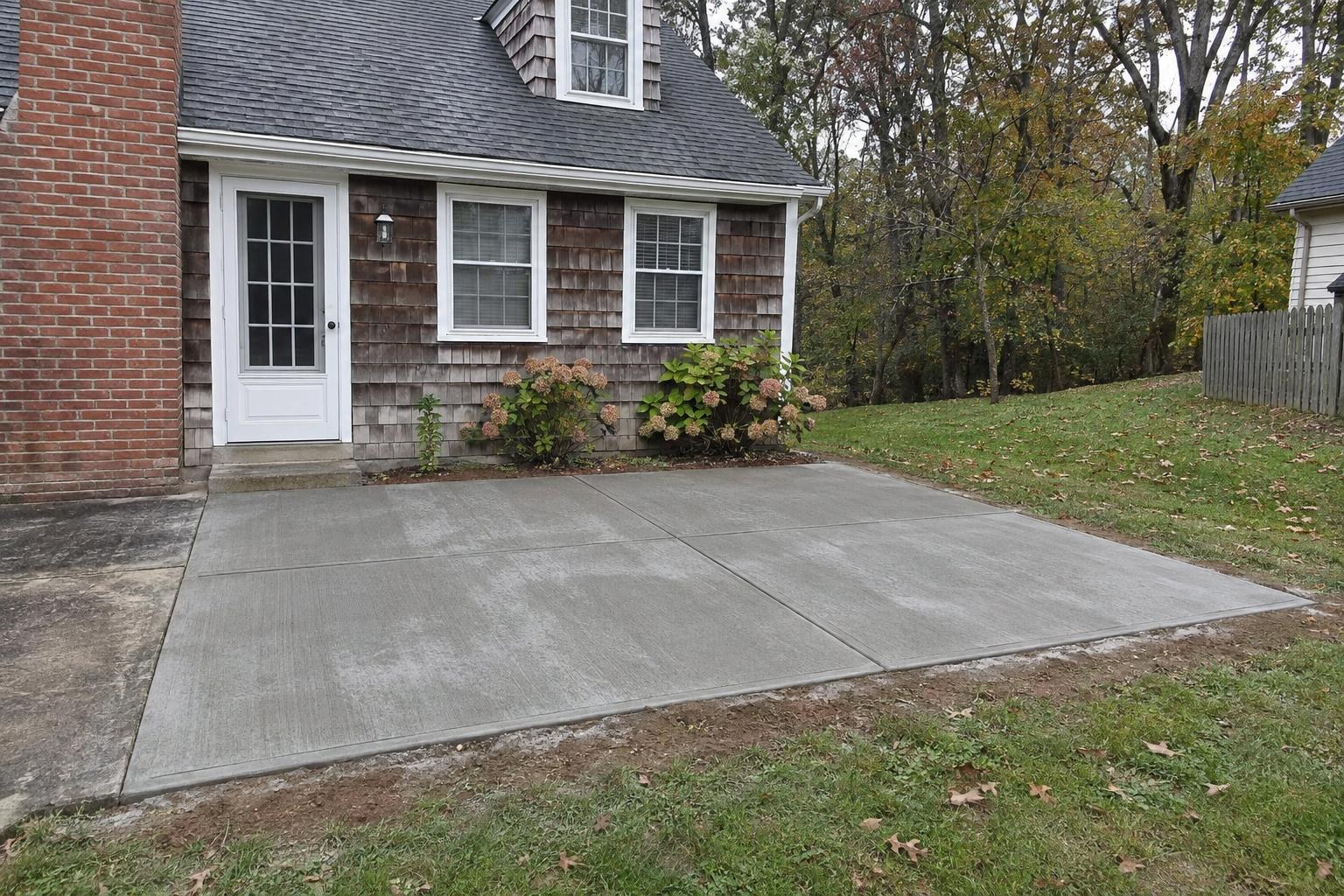
Control joints matter more than most homeowners realize. Concrete is going to crack somewhere, it's just a question of where. Joints cut every 8 to 10 feet, within 24 hours of the pour, give the slab a place to crack that you won't see. Skip that step and the crack picks its own spot, usually right down the middle where it's most visible.
Permits in College Park aren't a formality
New driveways, slabs, and retaining walls over a certain height typically need a permit through Prince George's County's Department of Permitting, Inspections and Enforcement. If the work touches the sidewalk or the driveway apron that meets the street, that's often in the public right-of-way, and the City of College Park has its own say in that, separate from the county. A contractor who's done work here before knows the difference and pulls the right permit before the crew shows up, not after a neighbor complains. If you're in one of the newer developments off Route 1 or out toward Greenbelt, check whether your HOA has its own approval process for anything visible from the street, patios and driveway resurfacing included. Skipping permits doesn't just risk a fine. It can come back on you at resale when a buyer's inspector asks for the paperwork and there isn't any.
What a suspiciously low quote is usually hiding
A bid that comes in thousands under everyone else almost always means something got cut. The usual suspects: a thinner slab than it should be, mesh where rebar belongs, no joint plan, or a base that's 2 inches of gravel instead of 4 to 6. Ask to see the mix design and the slab thickness in writing, not just verbally promised. If a contractor won't name a psi rating or tells you it doesn't matter, that's a sign they're not thinking about your climate, they're thinking about getting the truck emptied and moving to the next job.
Another flag: a crew that wants to pour on a day when the ground is still saturated from rain, or when there's a hard freeze expected that night. Concrete needs to stay above about 40 degrees for the first 48 hours to cure right. Pour it into frozen or waterlogged clay and you're setting up problems before the truck even leaves.
Timing the work around the weather here
Summers in College Park get hot and humid, which speeds up the set time and can cause surface cracking if the crew isn't finishing and curing fast enough, especially on an exposed aggregate or stamped job where the timing of the stamp or the wash matters down to the hour. Winter work is possible but needs cold-weather concrete practices, blankets, heated enclosures, admixtures, and a contractor who actually uses them rather than hoping for the best. Spring brings heavier rain, which matters for grading, if your yard already sheds water toward the house or pools near the foundation, that needs fixing as part of the job, not after.
Check the paperwork, then ask the harder question
Confirm the contractor is licensed and carries liability insurance, and ask for proof, not just a verbal yes. Then ask the question that tells you more than any brochure will: what happens if a crack shows up eight months from now? A contractor who's been doing this a while will talk about hairline cracking as normal and explain what's covered versus what isn't. One who gets defensive or promises a slab will never crack is either new to the trade or not being straight with you. Ask for a reference on a job that's been through at least one winter, not one poured last month. A slab looks good the day it cures. The real test is how it looks after it's lived through freeze-thaw, a few August heat waves, and a wet spring.
If you're weighing a driveway, a patio, a retaining wall, or a repair on a slab that's already failing, we're glad to walk the site and tell you what we'd actually do differently. You can see the range of work we handle at Rocksolid Concrete Works.